

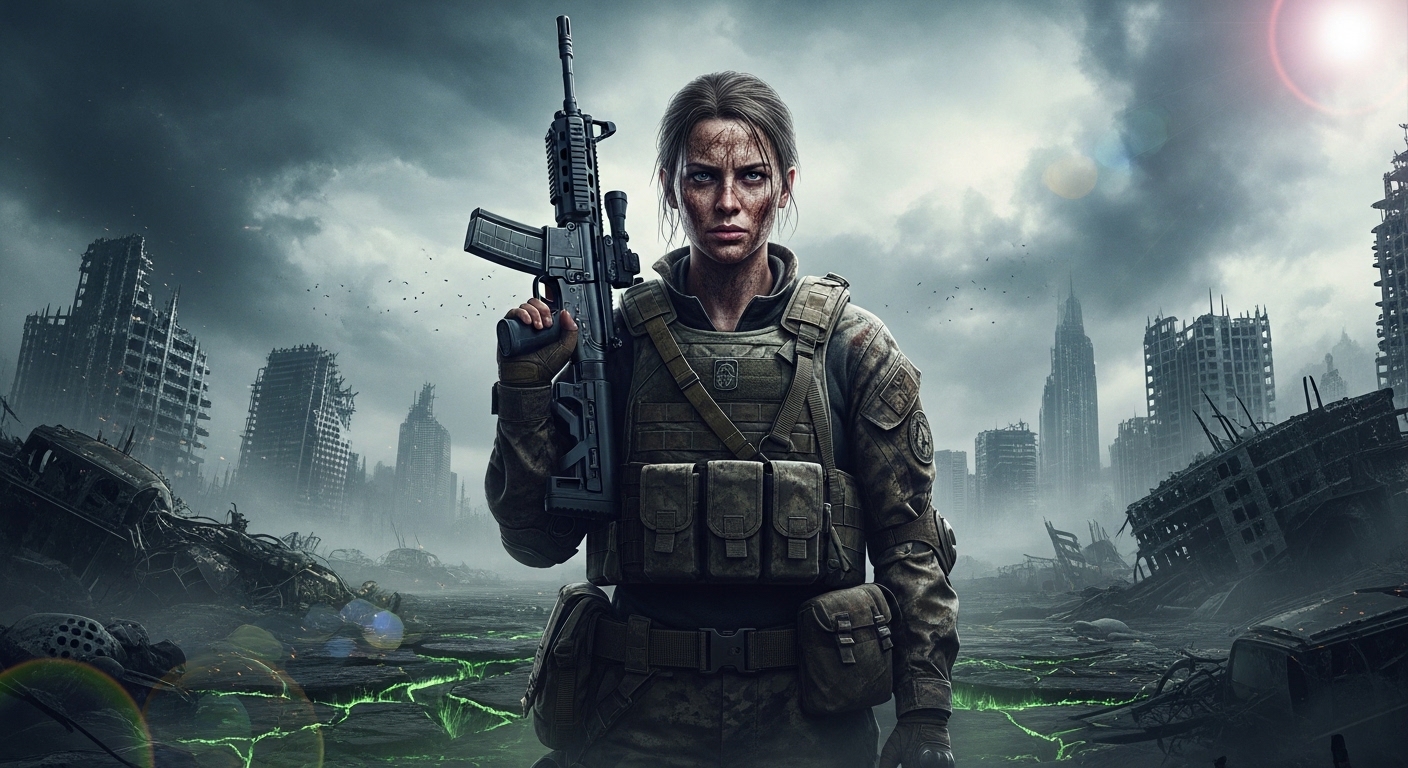
The mud in Georgia doesn’t just stick to your boots; it swallows your soul. It’s a thick, red clay that feels like wet concrete, and when you’re carrying sixty-five pounds of gear on a frame that barely hits five-foot-four, that clay feels like the Earth itself is trying to pull you under.
I heard the sneer before I felt the shove.
“Move it, Little Bird. You’re slowing down the real soldiers.”
Corporal “Brick” Bennett didn’t wait for me to adjust. He clipped my shoulder with his ruck as he power-marched past, the force sending me stumbling toward the ditch. I caught myself, my lungs burning with the metallic taste of overexertion, my vision blurring at the edges.
It was 03:00. We were eight miles into a twelve-mile forced march at Fort Benning, and I was the only woman in a platoon of sixty men who didn’t want me there.
To them, I wasn’t Private Elena Miller. I wasn’t a graduate of the University of Michigan with a degree in structural engineering. I wasn’t a daughter who had promised her father she’d carry on the family name after her brother died in the initial towers collapse.
To them, I was “The Liability.” The “Diversity Hire.” The “Ruck-Dragger.”
I adjusted the straps of my M249 Squad Automatic Weapon—a twenty-two-pound beast of steel and frustration—and bit my lip until I tasted blood. The pain in my mouth was a welcome distraction from the agonizing scream of my hip flexors.
“Don’t let him get to you, Lane,” a quiet voice whispered beside me.
That was Sarah Jenkins. She was a medic, a year older than me, and the only person in this godforsaken forest who didn’t look at me like I was a virus. She had a face like a sparrow and nerves like high-tension wire. She was the only reason I hadn’t cried yet.
“I’m fine,” I wheezed.
“You’re gray,” she countered, her own breath hitching. “Drink your water. We have four miles to the extraction point. If you drop, Brick is going to make sure they wash you out of the cycle by dawn.”
I looked ahead. Brick was leading the pack, his massive silhouette illuminated by the faint, ghostly glow of the moon through the pines. He was six-foot-three, a former high school linebacker from Ohio who viewed the Army as a sanctioned way to break things. He’d made it his personal mission to ensure I didn’t finish the course.
“She’s gonna crack,” I heard him shout to the guy next to him, loud enough for the wind to carry it back to me. “Look at her. She’s vibrating. One more mile and we’ll be carrying her gear like she’s a damn princess. If she can’t handle the weight, she should be back in the kitchen making sandwiches, not dragging down a combat unit.”
The men around him laughed—a low, guttural sound that hurt worse than the blisters on my heels.
They wanted me to quit. They needed me to quit. Because if I stayed, if I succeeded, it meant that their “elite” world wasn’t as exclusive as they thought. It meant that strength wasn’t just about the size of your biceps; it was about the iron in your blood.
I didn’t say a word. I just focused on the back of the boots in front of me. Left. Right. Left. Right.
But as the rain began to turn into a torrential downpour, and the trail turned into a river of sludge, I realized that tonight wasn’t just about a march. It was the beginning of a war—not against an enemy in a cave, but against the men I was supposed to call brothers.
And they had no idea that the “burden” they loathed was the only thing that would stand between them and a shallow grave when the world eventually turned to fire.
Chapter 1: The Weight of Contempt
The year was 2002. The world was still reeling, the air in America thick with a mixture of intense patriotism and a simmering, underlying fear. For me, it was the year I decided to stop being a bystander. My brother, Leo, had been a first responder. When the dust settled in Lower Manhattan, he was gone, and my father’s spirit seemed to have been buried under that rubble with him. Joining the Army wasn’t a choice; it was a survival mechanism. I needed to prove that the Miller name still had some fight left in it.
But Fort Benning didn’t care about my tragedy.
“Miller! If I see your knees hit that mud one more time, I will personally pack your bags and drive you to the nearest mall so you can find a job folding sweaters!”
Sergeant Jackson’s voice was a gravel-filled roar. He was a man who looked like he’d been carved out of an old oak tree—weathered, hard, and utterly unforgiving. He stood on the sidelines of the “Confidence Course,” his arms crossed over a chest that seemed wide enough to stop a humvee.
I was currently dangling from a rope twenty feet in the air, my hands raw and bleeding. The “Tough Nut” obstacle was designed to break your grip and your spirit. Below me, the rest of the platoon waited.
“Come on, Miller! Just let go!” Brick Bennett yelled from the bottom. “Save us all twenty minutes of watching you dangle like a wet rag. Some of us actually want to eat lunch today!”
A few of the guys chuckled. It was a familiar soundtrack.
I looked down at Brick. He was the quintessential American “alpha.” He was strong, yes, but he possessed a cruelty that only comes from a life where you’ve never been told ‘no.’ He saw my presence in the infantry-bound training as a personal insult to his masculinity.
I didn’t let go. I dug my fingernails into the hemp, felt the fibers bite into my skin, and swung my legs up. My core felt like it was being shredded, but I hooked my heels over the top bar and rolled. I landed on the other side, my knees buckling, the breath leaving my lungs in a ragged gasp.
“Time: slow as hell,” Jackson barked, checking his stopwatch. “Bennett, you’re up. Show her how a soldier does it.”
Brick flew over the course. He was a machine—all muscle and momentum. When he finished, he didn’t even look winded. He walked past me, deliberately brushing his sweat-soaked shoulder against mine.
“You’re a liability, Elena,” he whispered, his voice low enough that Jackson couldn’t hear. “In the field, when things go sideways, nobody’s gonna have time to wait for the girl to catch her breath. You’re gonna get someone killed. Why don’t you just take the easy way out and transfer to Intel? You’re smart, right? Go play with computers and leave the heavy lifting to us.”
I looked him straight in the eyes. His were a cold, piercing blue, devoid of any empathy. “I’m not going anywhere, Brick.”
“We’ll see,” he said with a smirk that didn’t reach his eyes. “The ‘Red Zone’ exercise is next week. Three days in the bush. No sleep. Limited rations. High-stress scenarios. You won’t last forty-eight hours. And I’ll be the one laughing when they carry you out on a litter.”
The “Red Zone” was the final evaluation before our unit was officially cleared for deployment. It was a simulated combat environment, designed to push every soldier to their breaking point. It was where the weak were culled from the pack.
That evening, I sat in the darkened barracks, cleaning my rifle. The smell of CLP oil was strangely comforting. Sarah was sitting on the bunk across from mine, patching a blister on her heel.
“You’re thinking about what he said,” Sarah stated. It wasn’t a question.
“He thinks I’m a burden,” I said, my voice barely a whisper. “And the worst part is… I see the way the others look at me. Even the guys who aren’t as loud as Brick. They look at me when we’re doing team drills, and I see the doubt. They think if a real firefight starts, I’ll be the one they have to protect. They don’t see me as a partner. They see me as an extra piece of gear they didn’t ask for.”
Sarah stopped what she was doing and looked at me. “Listen to me, Lane. Men like Brick Bennett define strength by how much weight they can carry. They don’t understand that real strength is about how much weight you can carry when you’re already broken. You’ve got more heart than any three of those guys combined. You’re not a liability. You’re the one who pays attention. You’re the one who notices the details they miss because they’re too busy flexing.”
“It doesn’t matter if I’m the smartest person here if I can’t keep up on a ten-mile run,” I said bitterly.
“Then run faster,” Sarah said firmly. “Stay up late. Practice your knots. Study the maps until you can see them in your sleep. Don’t just be ‘as good’ as them. Be so much better that they look like idiots for doubting you.”
But the isolation was a heavy coat to wear. In the mess hall, I sat at the end of the table. In the showers, there was a literal wall of silence between me and the others. I was a ghost in my own unit.
The supporting cast of our platoon was a microcosm of America in 2002.
There was “Pops” Vance, a thirty-year-old former construction worker from Oregon who had joined late because he felt he owed it to the country. He was quiet, his eyes always tired, but he was the only one who would occasionally nod at me when I did something right. He had a wife and two daughters back home, and he carried their photo in his helmet. He didn’t participate in the bullying, but he didn’t stop it either. He was just trying to survive.
Then there was “Junior” Lopez, a nineteen-year-old kid from East L.A. who was faster than a jackrabbit but terrified of failing. He followed Brick around like a loyal dog, laughing at his jokes because he was scared of becoming the next target. He had a weakness for sweets and a strength for radio communications.
And then there was Lieutenant Marcus Thorne.
Thorne was a mystery. He was West Point, polished but with a hidden edge. He rarely spoke, observing us with a detached, clinical intensity. He was the one who would ultimately decide our fates during the Red Zone. I’d seen him watching me during the ruck marches—not with the contempt of Brick or the pity of Sarah, but with a cold, analytical gaze. It felt like he was waiting for me to fail, not because he hated me, but because he wanted to see if his theory about women in the infantry was correct.
The weekend before the Red Zone, the tension reached a boiling point.
We were in the motor pool, performing maintenance on the Humvees. The heat was oppressive, a thick blanket of North Carolina humidity that made every movement feel like it was underwater.
Brick was working on a tire nearby, surrounded by his usual clique. I was struggling with a heavy winch cable that had jammed.
“Hey, Miller,” Brick called out, wiping grease on his trousers. “You need a man to help you with that? Or are you gonna stand there and stare at it until it fixes itself?”
“I’ve got it,” I said, my voice tight.
“Sure you do. Just like you ‘had’ the ruck march on Tuesday. I saw you leaning on Jenkins for the last two miles. It’s pathetic, really. The Sergeant is too ‘politically correct’ to say it, but we all know you’re the reason our platoon time is the lowest in the company. You’re dragging down our scores. You’re dragging down our reputations.”
I stopped pulling the cable and turned to face him. The entire motor pool went silent. Even the sound of wrenches hitting metal stopped.
“My scores are passing, Brick,” I said, my heart hammering against my ribs. “I do the same work you do. I carry the same weight.”
“Passing isn’t enough!” he roared, stepping toward me. He loomed over me, his shadow completely eclipsing mine. “In a war, ‘passing’ gets people killed. You’re a weak link in a chain that needs to be made of steel. You’re here because you want to prove something to your dead brother, or your daddy, or whatever. But this isn’t a therapy session. This is the Army. And you don’t belong.”
The mention of my brother hit me like a physical blow. The air felt thin.
“Don’t you ever mention my brother,” I hissed, my hand tightening around the heavy steel winch hook.
Brick laughed, a cruel, sharp sound. “Or what? You gonna cry? You gonna report me to the EO officer? Go ahead. It’ll just prove you can’t handle the pressure.”
He stepped closer, his chest inches from my face. “I’m going to make sure the Red Zone is the worst three days of your life. I’m going to push you until you break. And when you finally quit—and you will quit—I’m going to be the one who opens the door for you as you leave.”
I didn’t back down. I couldn’t. “You think you’re so strong because you’re big. But you’re fragile, Brick. You’ve never had to fight for anything in your life. Everything was given to you because of your size. I’ve had to fight for every inch of ground I stand on. You don’t know what real ‘tough’ is.”
He sneered, a look of pure loathing. “We’ll see about that on Monday, Little Bird. We’ll see who’s still standing when the sun goes down on Day Three.”
He turned and walked away, his cronies following him, leaving me alone in the middle of the motor pool. My hands were shaking, not from fear, but from a cold, righteous fury I didn’t know I possessed.
I looked up and saw Lieutenant Thorne standing by the office door. He had seen the whole thing. He didn’t say a word. He just adjusted his cap and walked back inside.
That night, I didn’t sleep. I spent the hours in the dark, practicing my land navigation on a map by the light of a dim red flashlight. I memorized the coordinates of the training area. I practiced stripping and reassembling my SAW until I could do it with my eyes closed.
I wasn’t just a soldier anymore. I was a woman with a point to prove, and the weight of my entire gender felt like it was resting on my shoulders.
I knew the Red Zone wouldn’t just be a test of my physical endurance. It would be a test of my sanity. Brick was right about one thing: he was going to try to break me.
But what he didn’t realize was that you can’t break something that has already been forged in fire. My brother’s death had broken me a year ago. Everything since then had been the process of putting the pieces back together into something harder, sharper, and more dangerous than I had ever been before.
Monday morning arrived with a sky the color of a bruised plum. We loaded into the trucks, the atmosphere inside the canvas-covered backs thick with tension and the smell of stale coffee.
Brick sat directly across from me. He didn’t say anything, but he kept his eyes locked on mine, a predatory glint in his gaze. He was checking his gear, sharpening a folding knife with slow, deliberate strokes.
Sarah reached out and squeezed my hand under the bench. Her hand was cold, but her grip was firm.
“Remember,” she whispered. “Slow is smooth. Smooth is fast.”
I nodded. I felt a strange sense of calm wash over me. The anticipation was over. The battle was finally here.
The trucks ground to a halt at the edge of a dense, swampy forest. The ramp dropped, and Sergeant Jackson’s voice cut through the morning mist.
“Welcome to the Red Zone, ladies! You have seventy-two hours to complete three objectives. If you lose your map, you’re lost. If you lose your weapon, you’re dead. If you lose your will… well, then you never belonged here in the first place.”
We stepped out into the mud.
As we formed up, I looked at the men around me. They looked tough. They looked ready. But I saw the flickers of anxiety in Junior’s eyes. I saw the way Pops was rubbing his lower back. And I saw the arrogance in Brick’s posture—the kind of arrogance that leads to careless mistakes.
I was the burden. I was the liability. I was the girl.
But as I stepped into the treeline, I knew one thing for certain:
By the time this was over, they wouldn’t be calling me “Little Bird” anymore. They’d be calling me for help.
And I’d have to decide if I was going to give it to them.
The weight of the SAW felt lighter today. Or maybe I was just getting used to the burden.
“Move out!” Thorne commanded.
And we disappeared into the green hell of the Georgia woods, the silence of the forest swallowing the sounds of our heavy boots, leaving only the sound of our breathing and the distant, ominous roll of thunder.
The first day was a blur of tactical movements and constant rain. We were moving through “Enemy Territory,” which meant we had to remain silent and invisible.
Brick was the point man. He moved with a surprising grace for a man of his size, but he was impatient. He kept pushing the pace, forcing the rest of us to jog to keep up.
“Slow down, Bennett,” Pops hissed from the middle of the line. “We’re losing the tail end.”
“If they can’t keep up, they get left behind!” Brick snapped back, not even looking over his shoulder.
I was at the rear—the “six” position. It was the most exhausting spot because you had to constantly turn around to check our tracks and ensure we weren’t being followed by the “OpFor” (Opposing Force) instructors who were hunting us.
By noon, the humidity was at 90%. My uniform was soaked through with a mix of rain and sweat. My pack felt like it was filled with lead. Every time I stumbled, I could feel Brick’s eyes on me, even though he was at the front. He would stop the column just to wait for me to catch up, then immediately start moving again the second I reached them, denying me even a moment of rest.
It was a psychological war. He was trying to drain my battery, to make me the reason the unit failed.
Around 16:00, we reached a wide, rushing creek. The recent rains had turned it into a brown torrent of debris and foam.
“We cross here,” Thorne said, pointing to a fallen log that spanned the gap. It was slick with moss and vibration from the rushing water below.
Brick went first. He walked across it like a tightrope walker, his balance impeccable. He jumped down on the other side and turned around, crossing his arms.
One by one, the men crossed. Some slipped, some crawled on their bellies, but they all made it.
Then it was my turn.
I stepped onto the log. The roar of the water was deafening. My boots struggled for purchase on the slimy bark. I was halfway across when the log groaned.
“Look at her,” I heard Brick say to Junior. “She’s shaking like a leaf. Ten bucks says she falls in and we have to waste an hour fishing her out.”
I froze. My center of gravity was off because of the heavy SAW slung across my back. I looked down at the churning water. If I fell, the weight of my gear would pull me under in seconds.
“Keep your eyes on the far bank, Miller!” Thorne’s voice was calm, cutting through the noise.
I took a breath. I didn’t look at Brick. I didn’t look at the water. I looked at the mossy trunk of an oak tree on the other side.
I took another step. Then another.
Just as I reached the end, my foot slipped. I felt myself tipping backward.
A hand reached out and grabbed my harness. It wasn’t Sarah. It wasn’t Thorne.
It was Brick.
He yanked me onto the bank with such violence that I hit the ground hard, the wind knocked out of me.
“See?” he sneered, loud enough for everyone to hear. “Can’t even cross a damn log without help. You’re lucky I was here, Miller. Otherwise, you’d be halfway to the Atlantic by now.”
He didn’t help me up. He just stepped over me and kept walking.
I lay there for a second, my heart hammering. Sarah ran over and helped me to my feet.
“You okay?” she whispered.
“I’m fine,” I said, though my knees were trembling.
I looked at Brick’s back. He hadn’t caught me to be helpful. He had caught me so he could humiliate me. He wanted the narrative to be that he saved the “weak girl.”
But as we moved deeper into the woods, I noticed something. Brick was so focused on me, so focused on his own superiority, that he was getting sloppy. He wasn’t checking the ground. He was moving too fast through areas of dense cover.
And in the Red Zone, sloppiness was a death sentence.
As night fell, the real test began. We were ordered to set up a cold camp—no fires, no lights. We huddled in the mud, eating cold MREs. The temperature dropped, and the rain turned into a biting sleet.
I was on watch from 01:00 to 03:00. I sat in the darkness, my night vision goggles (NVGs) making the world look like a grainy, green ghost-land.
I heard a twig snap.
I froze. I slowly shifted my SAW toward the sound. Through the green lens, I saw a shape moving through the brush. It was small, low to the ground. A scout. One of the instructors.
I didn’t yell. I didn’t panic. I slowly crawled over to where Lieutenant Thorne was sleeping and put a hand on his shoulder. He was awake instantly.
I pointed toward the brush.
He looked through his own NVGs. He nodded. He signaled for the rest of the platoon to wake up.
We moved silently, flanking the position I had spotted. Within ten minutes, we had “captured” three OpFor scouts who had been trying to steal our maps while we slept.
“Good eyes, Miller,” Thorne said quietly as the “captured” instructors were led away to the extraction point.
It was the first time he had praised me.
I saw Brick standing in the shadows. He looked pissed. He had been the one on watch before me, and he had missed them completely. He had probably been nodding off, confident in his own physical prowess but failing in the basic mental discipline of the watch.
“Luck,” I heard him mutter as we went back to our positions. “Pure damn luck.”
But I knew it wasn’t luck. It was focus. It was the fact that I knew I had to be twice as sharp just to be considered half as good.
The first day ended with us tired, wet, and miserable. But we were still in the game.
However, as I tried to get a few hours of sleep in the mud, I had a sinking feeling in my gut. The instructors wouldn’t let us win that easily. Tomorrow, the pressure would double. And I knew Brick wouldn’t let my “success” go unpunished.
The burden was still heavy. But for the first time, I felt like I was starting to carry it, rather than it carrying me.
And I knew, deep down, that the real climax of this story hadn’t even begun yet. The forest was watching. The men were doubting. And the Red Zone was just getting started.
The final thought I had before I drifted into a fitful sleep was of my brother’s face. I’m still here, Leo, I whispered in my mind. I’m still standing.
And that was enough. For now.
Chapter 2: The Breaking Point of Pride
The second day of the Red Zone didn’t begin with a sunrise. It began with the cold, wet slap of a poncho against my face and the smell of sulfur rising from the marsh. The sky remained a stubborn, bruised purple, heavy with clouds that looked like they were pregnant with more leaden rain.
My body felt like it had been dismantled and put back together by an amateur. Every joint screamed. My feet, inside my damp boots, felt like raw meat. But when the whistle blew at 04:30, I was the first one out of my hole.
Brick Bennett was slower to move. I watched him through the haze of my own exhaustion. He was scowling, his massive shoulders hunched against the chill. He looked at me, and for a split second, I saw a flicker of something new in his eyes. It wasn’t just contempt anymore. It was resentment. I had caught the scouts he had missed. In his world, that was a debt that had to be paid in humiliation.
“Pack it up!” Sergeant Jackson’s voice tore through the trees. “We’ve got six miles of swamp between us and Objective Bravo. If you lose your boots in the muck, keep moving on your stumps. I want this platoon at the coordinates by 09:00, or you’ll all be doing the course again in January.”
The “Swamp Run” was legendary at Benning. It wasn’t a run; it was a slow, agonizing crawl through waist-deep water, tangled roots, and the constant threat of cottonmouths.
Lieutenant Thorne gathered us around a map. He looked fresh, almost annoyingly so. “Bennett, you’re still on point. Miller, you’re on the SAW. I want you right behind the lead element. If we hit an ambush in the tall grass, I need that fire output immediately.”
I saw Brick’s jaw tighten. Having the “burden” right on his heels was clearly not his idea of a good time.
“Sir, with all due respect,” Brick said, his voice straining for a polite tone he didn’t possess, “Miller’s slow in the water. She’ll bottle-neck the whole line. Put Junior behind me. He can keep the pace.”
Thorne didn’t even look up from his compass. “I didn’t ask for your tactical assessment, Corporal. I gave an order. Miller, on the SAW. Move out.”
We entered the water ten minutes later.
It was freezing. The kind of cold that steals the air from your lungs and makes your heart skip a beat. The mud at the bottom was deceptive—one step you’d be on solid ground, the next you’d be chest-deep in a hole.
Brick took off like a man possessed. He wasn’t just leading; he was trying to outrun me. He carved a path through the reeds, intentionally letting branches whip back to hit me in the face.
“Keep up, ‘Engineer,’” he spat over his shoulder. “Or is the water too icky for your manicured nails?”
I didn’t answer. I focused on the weight of the M249. It felt like a boat anchor. My pack was waterlogged, adding another twenty pounds of dead weight. Every step was a battle of physics. I had to lift my leg high out of the suction of the mud, swing it forward, and pray the ground held.
Beside me, Pops Vance was struggling. His face was a mask of gray pain. I could hear the rhythmic click-pop of his bad knee with every stride.
“You okay, Pops?” I whispered.
“Fine, kid,” he wheezed, though his grip on his rifle was white-knuckled. “Just… too much ‘construction’ in these old bones. Keep your eyes on Brick. He’s looking for a reason to trip you.”
Pops was right. About a mile into the swamp, the water deepened. We were wading through a narrow channel flanked by dense, thorny thickets.
Brick stopped suddenly. I almost slammed into his back.
“What is it?” I asked.
“Logjam,” he said. He pointed to a tangle of fallen cypress trees blocking the path. The water was rushing over them in a miniature waterfall. “We have to climb over. Miller, you go first. Show us that ‘heart’ Sarah keeps talking about.”
It was a trap. The logs were slick with algae and angled in a way that made a slip almost certain. If I fell with the SAW, I’d go straight to the bottom under thirty pounds of steel.
Thorne was further back, helping Junior who had gotten his foot wedged in a root. He couldn’t see us.
“Go on,” Brick urged, a nasty smile playing on his lips. “Unless you want me to tell the Sergeant you froze up at a basic obstacle.”
I looked at the logs. I looked at the dark, swirling water. I remembered Leo.
In the weeks after the towers fell, before we knew for sure he wasn’t coming back, I used to sit on the floor of his apartment and look at his climbing gear. He loved the mountains. He used to tell me, “Elena, the mountain doesn’t care if you’re a girl or a boy. It only cares about gravity. You don’t fight the mountain; you use its own shape to move.”
I didn’t climb the logs the way Brick expected. I didn’t try to beast my way over the top. I stayed low. I used the SAW as a counterweight, wedging the barrel into a notch in the wood to create a pivot point. I moved like a spider, spreading my weight, feeling for the friction.
I cleared the jam in thirty seconds.
I stood on the other side, dripping, shivering, but upright. I looked back at Brick.
His smile was gone. He looked genuinely annoyed that I hadn’t ended up face-down in the muck.
“Lucky break,” he muttered, scrambling over the logs with far less grace, nearly slipping twice because he tried to use pure muscle instead of balance.
As the hours dragged on, the psychological toll became worse than the physical. The sleep deprivation started to play tricks on the mind. The trees started to look like people. The sound of the wind sounded like distant shouting.
Junior was the first to start cracking. He was the youngest, a kid who had joined for the GI Bill and a chance to see something other than the concrete of Los Angeles.
“I can’t feel my toes,” Junior whimpered during a brief security halt. “I think I have trench foot. Man, I can’t do this. I’m gonna signal for a medic. I’m gonna quit.”
Brick turned on him like a predator. “You quit, and I will personally ensure you spend the rest of your contract scrubbing toilets in Alaska. You’re not quitting. You’re just being a pussy.”
“He’s cold, Brick,” Sarah snapped, crawling over to Junior. She reached into her kit and pulled out a dry pair of socks she’d kept in a waterproof bag. “Junior, look at me. Change your socks. Eat a protein bar. The objective is only two miles away. You can do two miles.”
“He doesn’t need socks, he needs a spine!” Brick yelled.
“Back off, Bennett!” I said, my voice surprising even me with its sharpness.
Brick turned his glare toward me. “Excuse me?”
“You heard me. You’re supposed to be a leader, right? Point man? All you’ve done for six hours is bitch and moan and try to sabotage your own teammates. You want to be a hero? Start acting like you give a damn about the people behind you.”
The silence that followed was heavy. The other men—Pops, the quiet twins from Georgia, the guy we called ‘Tex’—all looked away. They knew I was right, but they were too afraid of Brick’s social shadow to back me up.
Brick took a step toward me, his face inches from mine. He smelled like tobacco and sour sweat. “You think because you caught a few scouts you’re one of us now? You’re a tourist, Miller. You’re playing soldier. When the real bullets start flying, you’ll be the first one to scream for your mama. And when that happens, I’ll be the one who has to carry your weight. So don’t you ever tell me how to lead.”
“I’m not playing,” I said, my voice steady despite the adrenaline dumping into my system. “And I’m not screaming. But you might want to check your map, ‘Leader.’ Because if we keep heading 180 degrees south like you’ve been doing for the last twenty minutes, we’re going to walk straight into the artillery impact zone, not Objective Bravo.”
Brick froze. He looked at the compass on his wrist. He looked at the map. Then he looked at the sun, which was faintly visible through the clouds.
He had been so focused on outwalking me, on showing off his pace, that he had drifted nearly fifteen degrees off course. In a swamp, fifteen degrees is the difference between a dry bed and a swampy grave.
“I’m on course,” he lied, his voice cracking slightly.
“You’re not,” Pops said, finally speaking up. He pulled out his own compass. “Miller’s right. We’re drifting. We need to pivot east.”
Brick’s face went a deep, ugly red. The humiliation of being corrected by the “burden” in front of the whole squad was more than his ego could handle.
“Fine!” he barked. “East! Everyone move! Now!”
He surged forward, faster than before, driven by a desperate need to reclaim his dominance. He was reckless now. He wasn’t checking for tripwires. He wasn’t checking the treeline.
We reached the edge of the swamp around 08:30. We were exhausted, caked in mud, and shivering. We had thirty minutes to reach the objective—a simulated village where we were supposed to perform a “Search and Secure” mission.
“Double time!” Brick ordered.
We broke into a jog across a clearing of tall, yellow grass. It was the perfect place for an ambush.
“Wait,” I called out. “Brick, stop! The grass is too quiet.”
“Shut up, Miller!” he yelled back. “We’re late!”
He led the platoon straight into the center of the field.
A sharp pop-pop-pop echoed from the treeline.
“AMBUSH!” Thorne screamed. “Get down! Return fire!”
It was the OpFor. They were positioned in a horseshoe formation around the field. We were caught in a “kill zone” with zero cover.
“Left! Go left!” Brick shouted, panicked. He started running toward a small cluster of rocks, but he was leading the squad directly into the strongest part of the enemy line.
“No!” I roared. I didn’t think. I just acted. I dropped to my knees in the mud, ignored the pain, and set the bipod of the SAW. “Pops! Junior! Cover the right! I’m laying down a base of fire!”
I pulled the trigger. The M249 roared to life, spitting out blank rounds with a rhythmic, bone-shaking thud. Even though they were blanks, the noise and the muzzle flash were enough to make the “enemy” instructors duck.
“Move!” I yelled at the others. “Get to the ditch on the right! I’ve got you!”
For the next two minutes, I was the only thing keeping the platoon from being “wiped out.” I cycled through belts of ammo, shifting my fire in short, controlled bursts, just like I’d practiced in the dark. I didn’t feel the weight of the gun anymore. I didn’t feel the cold. I felt like a machine.
One by one, the guys scrambled into the safety of a deep drainage ditch. Sarah went first, then Junior, then Pops.
Brick was the last one in the field. He had tripped over a hummock of grass and was scrambling on his hands and knees, his face pale with genuine terror. He looked small. He looked like the “Little Bird” he always called me.
I kept firing, my barrel getting hot, until Brick tumbled into the ditch.
“Cease fire!” Thorne called out.
The instructors emerged from the woods, wearing yellow vests. One of them, a grizzled Master Sergeant, walked over to us. He looked at the ditch, then he looked at me, still kneeling in the mud with the smoking SAW.
“Who was on the SAW?” he asked.
“Private Miller, Sergeant,” Thorne said, stepping forward.
The Master Sergeant walked over to me. I stood up, my legs shaking.
“Miller, that was the only reason your squad didn’t get ‘killed’ today. Your point man led you into a death trap. You were the only one who kept your head.” He turned to Brick. “Bennett, you’re dead. In a real fight, you’d be a memory. Go to the back of the line. Miller, you’re taking the lead for the village approach.”
The world seemed to stop spinning for a second.
Brick looked like he’d been slapped. He looked at the ground, his hands trembling. The “alpha” had been gutted in front of everyone.
I didn’t feel smug. I just felt tired.
“Let’s go,” I said, my voice rasping.
We moved toward the village. I was in the lead now. The “burden” was the guide.
But as we approached the first plywood building, I saw a movement in an upstairs window. It wasn’t an instructor. It was something else.
The Red Zone was supposed to be a simulation. But as a black SUV with no markings pulled onto the training grounds, and Lieutenant Thorne’s radio began to crackle with an urgent, real-world frequency, I realized the “training” was about to end.
“All units, this is Command,” a voice crackled over the radio. It wasn’t the usual training officer. It sounded like it was coming from the Pentagon. “We have a Code Red situation. Real-world threat detected in Sector 4. This is not a drill. I repeat, this is NOT a drill.”
Thorne’s face went white. He looked at us—a group of exhausted, mud-covered recruits.
“Miller,” he said, his voice barely a whisper. “Get the SAW ready. This just got real.”
The transition from training to reality is a blur. One moment you’re worried about your grade; the next, you’re worried about your life.
The SUV screeched to a halt fifty yards away. Four men in tactical gear, carrying weapons that definitely weren’t firing blanks, jumped out.
I didn’t know who they were. I didn’t know what they wanted. But I knew one thing:
My platoon was trapped in a ditch with nothing but blank ammo and a sense of shock.
Except for me.
In my haste to prepare for the Red Zone, I had accidentally—or perhaps subconsciously—kept one belt of live ammunition in the bottom of my SAW pouch from the range the week before. I’d meant to turn it in. I’d forgotten.
I looked at the live rounds, their brass casing glinting in the dull light.
I looked at Brick, who was curled in a ball at the bottom of the ditch, hyperventilating.
I looked at Sarah, who was reaching for her medical bag, her eyes wide with fear.
The girl they called the “burden” was the only one with a loaded gun.
And as the men from the SUV began to advance toward us, their faces hidden by masks, I realized that the American dream I had joined to protect was about to be tested in a way no training manual could ever describe.
“Miller!” Thorne hissed. “What are you doing?”
I didn’t answer. I reached into my pouch, pulled out the live belt, and fed it into the feed tray. The metallic clack-clack of the bolt locking back was the most terrifying and beautiful sound I had ever heard.
“I’m doing my job, sir,” I said.
The story was no longer about a girl in a man’s world.
It was about a soldier in a world on fire.
And as the first shot—a real, high-velocity crack—zipped over our heads, I knew that tomorrow, the world would know my name. Or they would never know I existed at all.
But Brick Bennett would know. He would know that when the world ended, the only thing that stood between him and the dark was the “burden” he had tried so hard to break.
The mud of Georgia didn’t feel so heavy anymore. It felt like home.
“Get down!” I screamed at my unit. “I’ve got the line!”
And then, I opened fire.
Chapter 3: The Ghost of the Machine
The sound of a live round passing near your head is something you never forget. It isn’t a “bang” like in the movies. It’s a sharp, wicked snap-crack, the sound of the air itself being whipped like a piece of silk. It’s the sound of mortality.
When that first bullet hit the plywood wall of the “village” structure behind us, sending a shower of splinters over my neck, the world slowed down. The transition from “training” to “combat” is a biological hijack. Your heart doesn’t just beat; it tries to escape your chest. Your vision tunnels until you can only see the front sight post of your weapon.
“Down! Everybody down!” Lieutenant Thorne screamed.
He didn’t have to tell them twice. The men who had spent the last week strutting like peacocks were suddenly trying to bury themselves in the Georgia mud. Junior was sobbing, a rhythmic, hiccuping sound. Pops was frozen, his eyes wide and vacant, staring at the black SUV.
And Brick.
Brick Bennett, the man who had called me “Little Bird,” the man who claimed I was a liability, was curled into a fetal position. His M16 was lying in the dirt three feet away. He was shaking so hard his helmet was rattling against the stones. He had “the thousand-yard stare,” but he hadn’t even seen the thousand yards yet. He had just seen the reality that he wasn’t the biggest thing in the woods anymore.
“Miller! Is that live ammo?” Thorne crawled toward me, his face masked in dirt and terror.
“Yes, sir,” I shouted over the roar of another volley from the SUV. “One belt. Fifty rounds. I forgot to turn it in after the range.”
Thorne looked at the men in tactical gear advancing across the clearing. They weren’t soldiers. They didn’t move like the 82nd Airborne. They moved with a jagged, aggressive desperation. Later, we’d find out they were a radicalized cell, domestic insurgents who thought they could seize a cache of experimental communications hardware being tested at Fort Benning during the chaos of the post-9/11 buildup. But in that moment, they were just monsters in black balaclavas.
“They think we’re unarmed,” Thorne hissed, his mind racing. “They think we’re just a bunch of recruits with blanks. Miller, if you don’t suppress them, they’re going to walk right up to this ditch and execute us.”
I looked at the belt. Fifty rounds. In a SAW, fifty rounds is about six seconds of sustained fire. Six seconds to save sixty lives.
“Pops! Junior! Get your heads up!” I roared.
They didn’t move.
“Pops! Look at me!”
The older man’s eyes slowly drifted to mine. I saw the Oregon logger in him, the man who had survived winters in the Cascades.
“I need you to link the rest of the blanks,” I commanded. “If we alternate live fire with blanks, the noise might keep them back. They won’t know which is which. We just need to buy time for the MPs to get here.”
“I… I can’t,” Junior whimpered.
“Junior, if you don’t move, Sarah dies,” I said, pointing to the medic who was trying to pull a wounded instructor behind a tree.
That did it. The mention of Sarah—the only person who had been kind to him—snapped him out of it. He began fumbling with his gear.
I turned back to the clearing. The men from the SUV were thirty yards away. They were laughing. I could hear them. They thought they were hunting sheep.
I settled the buttstock of the M249 into the hollow of my shoulder. I felt the cold steel against my cheek. I remembered the weight of the winch cable in the motor pool. I remembered the log in the swamp. Everything that had been used to break me had actually been building the muscle I needed for this exact second.
For Leo, I thought.
I squeezed the trigger.
The SAW erupted. The recoil was a familiar, violent shove. I fired in a long, controlled burst—ten rounds.
The man in the lead, a tall guy with a tactical vest, didn’t just drop; he was flipped backward as the heavy 5.56mm rounds caught him in the chest. The laughter stopped instantly. The other three dived for cover behind the SUV.
“They’ve got live lead!” one of them screamed. “I thought you said they were trainees!”
“Shut up and fire back!” another barked.
A hail of bullets hammered the lip of our ditch. Dirt sprayed into my mouth.
“Miller, move!” Thorne yelled. “They’re going to flank us!”
“I’m the only one who can stop them, sir!” I shouted back. “Pops, give me those blanks!”
I did something insane. I didn’t stay in the ditch. I knew the “village” layout because I had studied the blueprints of the training site the night before, analyzing the structural weaknesses as an engineer would. I knew there was a drainage pipe that ran from the ditch to the basement of the “Hotel” structure—a three-story plywood building twenty yards to our left.
“I’m going to the Hotel,” I told Thorne. “I can get a high-ground advantage. Keep them busy with the blanks. Make it sound like a whole squad is firing.”
“Miller, that’s a suicide mission,” Thorne said, reaching for my harness.
I slipped out of his grip. “No, sir. It’s a calculation.”
I dragged the SAW and the ammo into the pipe. It was narrow, filled with freezing water and the smell of rot. I crawled on my elbows and knees, the heavy gun scraping against the concrete. My lungs felt like they were collapsing. The “burden” of the gear was now my only shield.
Inside the pipe, the sounds of the battle were muffled, a rhythmic thumping like a giant’s heartbeat. I felt a wave of pure, unadulterated loneliness. I was twenty-two years old, a girl from Michigan who liked jazz and bridge design, and I was crawling through a sewer to fight men who wanted to kill my friends.
I reached the end of the pipe and kicked out the grate. I was in the basement of the Hotel. I scrambled up the stairs, my boots thudding on the hollow wood.
I reached the second floor and positioned myself at a window overlooking the SUV.
From here, I could see everything. The insurgents were pinned down by the noise of the blanks from the ditch, but they were preparing a granade. If they tossed that into the ditch, Thorne and the others were finished.
I saw the man with the grenade. He was pulling the pin.
I didn’t hesitate. I didn’t think about the morality of taking a life. I thought about Sarah’s sparrow-face. I thought about Pops’ daughters.
I fired a three-round burst.
The man dropped the grenade at his own feet.
An explosion rocked the clearing, a plume of black smoke and fire engulfing the rear of the SUV. The remaining two insurgents scrambled away from the wreck, blinded and disoriented.
“Now!” I screamed toward the ditch. “Advance! Use your bayonets if you have to! Move!”
I saw Thorne rise from the mud. He looked up at the window, saw me, and let out a primal roar. “PLATOON! ATTACK!”
It was a sight I will carry to my grave. Sixty men, led by a Lieutenant who had doubted me and a medic who had saved me, rose out of the earth like ghosts. They didn’t have live ammo, but they had three hundred pounds of rage and the momentum of a landslide.
They swarmed the clearing.
One of the insurgents tried to raise his rifle, but Pops Vance—the “old man” with the bad knee—hit him like a freight train, tackling him into the mud and disarming him with a flurry of punches that came from twenty years of hard labor.
Junior was right behind him, screaming at the top of his lungs, his fear turned into a frantic, desperate energy.
And then there was Brick.
Brick had finally stood up. He walked toward the clearing, his face blank. He saw the carnage. He saw the man I had shot. He saw the smoking ruins of the SUV.
He looked up at the window where I stood.
I didn’t wave. I didn’t smile. I just stood there, the SAW hanging from its sling, my face covered in soot and Georgia clay.
The “Little Bird” had found her talons.
The MPs arrived five minutes later, a convoy of Humvees and sirens that tore through the morning mist. They secured the area, handcuffed the surviving insurgents, and immediately began a debriefing that would last for days.
As the sun finally broke through the clouds, casting long, golden fingers through the pine trees, we were ordered to form up in the clearing.
We were a mess. Blood, mud, tears, and the lingering scent of cordite.
Sergeant Jackson stood before us. He looked at the SUV, then at the ditch, and finally at me. He didn’t say anything for a long time. He just walked over to me, took the SAW from my hands, and inspected the feed tray.
“Empty,” he noted.
“Yes, Sergeant,” I said. My voice was gone, a dry rasp.
He handed the weapon back to me. Then, in front of the entire company, in front of the MPs and the Colonels who had just arrived, Sergeant Jackson did something I never thought I’d see.
He snapped to attention and saluted me.
“Private Miller,” he said, his voice echoing in the quiet woods. “You are a credit to this uniform. You didn’t just pass the Red Zone. You redefined it.”
One by one, the men of the platoon followed suit. Pops. Junior. Even the twins. They stood in the mud, battered and broken, and they showed me the respect I had earned in blood.
But Brick stayed in the back. He couldn’t look at me. The shame was a physical weight on him, a burden far heavier than any ruck I had ever carried. He had realized the truth that every bully eventually faces: that physical size is a lie, and that the “weak” are often the only ones strong enough to carry the world when it breaks.
Sarah came over and wrapped a wool blanket around my shoulders. She didn’t say anything. She just leaned her head against my arm and cried.
I looked out over the training grounds. I thought about Leo. I thought about the bridge I would one day build—not out of steel and concrete, but out of the lives of the people I had saved today.
I wasn’t the “unit burden.” I was the unit’s foundation.
But the story wasn’t over. As the investigation into the “Code Red” incident deepened, a secret was uncovered—one that involved Lieutenant Thorne, a hidden agenda within the base, and a choice I would have to make that would change the course of my career forever.
Because in the Army, the battle with the enemy is often easier than the battle with the truth.
The final chapter of the Red Zone was about to begin. And this time, I wouldn’t just be defending a ditch. I’d be defending the soul of the unit itself.
I looked at Brick, who was finally walking toward me, his head bowed. He stopped five feet away.
“Miller,” he whispered.
I waited.
“I… I’m sorry.”
I looked at him—really looked at him. I saw the broken boy inside the big man.
“Don’t be sorry, Brick,” I said, my voice cold but clear. “Be better. Because next time, I might not be there to carry you.”
I turned and walked toward the waiting trucks. My boots felt light. The red clay of Georgia finally let go of my feet.
I was going home. But I was leaving a legend behind.
Chapter 4: The Long Blue Line
The silence of a military debriefing room is a heavy, synthetic thing. It’s not the quiet of the woods or the peace of a bedroom; it’s the silence of a vacuum, designed to suck the truth out of you until there’s nothing left but the cold, hard facts.
I sat in a metal chair that felt like it was made of ice. My knuckles were still stained with the carbon and grease of the SAW, though I’d scrubbed my hands until they were raw. I was still wearing my torn ACUs, the Georgia mud having dried into a stiff, red crust.
Across from me sat two men in charcoal-gray suits. They didn’t have names, only titles. CID. Criminal Investigation Command. To my left, Lieutenant Thorne sat, his dress uniform pristine, but his eyes looked like they’d been dragged through glass.
“Let’s go over it one more time, Private Miller,” the older suit said. He had a voice like a file on a rusted hinge. “You’re claiming that during a high-stakes field training exercise, you ‘accidentally’ discovered a fifty-round belt of live 5.56mm ammunition in your SAW pouch? Ammunition that should have been turned into the armory forty-eight hours prior?”
“That’s correct, sir,” I said. My voice was a flat, dead thing.
“And you’re asking us to believe that this massive breach of safety protocol—a court-martial offense—was the only thing that stopped a domestic terrorist cell from executing an entire platoon of recruits?”
I looked him dead in the eye. “I’m not asking you to believe anything, sir. I’m telling you what happened. If I hadn’t had those rounds, Sarah Jenkins would be in a body bag. Junior Lopez would be a memory. And you wouldn’t be sitting here asking me questions; you’d be drafting apology letters to sixty American families.”
The suit leaned forward, his shadow stretching across the table. “You have a hero complex, Miller. Or maybe you’re just a liar who wanted to play Rambo. Having live ammo in the Red Zone is a violation of the Uniform Code of Military Justice. We could strip you of your rank, discharge you dishonorably, and see that you never work in structural engineering or any other field again.”
Thorne cleared his throat. “With all due respect, gentlemen, if Private Miller is punished for this, I will personally go to the press. This wasn’t a training accident. This was an infiltration of a secure military installation. The failure isn’t with a twenty-two-year-old recruit; the failure is with Base Security and the intelligence community that allowed that SUV onto Sector 4.”
The room went colder. The suits didn’t like being told where the failure lay.
“Wait outside, Miller,” the younger suit snapped.
I stood up, my legs feeling like they were made of lead. I walked out into the hallway of the headquarters building.
The hallway was lined with the men of my platoon.
They weren’t supposed to be there. They were supposed to be in the barracks, sleeping off the trauma. But there they were—sixty men, standing in two perfect lines against the walls.
As I walked through them, something happened that I will never forget.
Pops Vance was the first. He didn’t say a word, but as I passed, he snapped to attention. Then Junior. Then the twins. One by one, the men I had “burdened” with my presence stood tall for me.
At the end of the line was Brick Bennett.
He looked different. The arrogance had been burned out of him, replaced by a hollow, quiet humility. He had a bandage over his eye from where he’d hit the dirt in the ditch. He didn’t look like a linebacker anymore; he looked like a man who had seen the bottom of his own soul and didn’t like what he’d found there.
“Miller,” he said, stepping out of line.
The hallway went silent. I expected a final insult, a last-ditch effort to save his ego.
“They’re gonna try to pin the ammo on you,” Brick said, his voice loud enough for the guys in the suits to hear through the door. “I heard them talking. They want a scapegoat so they don’t have to explain how those guys got on base.”
“I know, Brick,” I said.
“Well, they’re gonna have to go through all of us,” he said. He looked back at the platoon. “Right, boys?”
A low, guttural murmur of agreement rippled through the hall.
“I was the point man,” Brick said, turning back to me. “I was the one who screwed up the nav. I was the one who led us into the kill zone. If you go down for saving us, then the Army doesn’t deserve any of us.”
He reached into his pocket and pulled out something small. It was a challenge coin—an unofficial one he’d bought at the PX, depicting the infantry cross-rifles. He pressed it into my hand.
“You’re the best soldier I’ve ever met, Elena,” he whispered. “And I’m a coward for ever making you feel like you weren’t.”
I looked at the coin, then at him. “You’re not a coward, Brick. You just didn’t know what a real fight looked like. Now you do.”
Three hours later, the door to the debriefing room opened.
The suits walked out, looking disgruntled. Behind them, Lieutenant Thorne had a small, tight smile on his face.
“The charges are being dropped,” Thorne said, walking over to me. “But there’s a catch. The incident is being classified. You are never to speak of the live ammo. Officially, the ‘terrorists’ were stopped by a rapid-response MP team. Your role is to be recorded as ‘exemplary conduct under fire,’ but the specifics of the SAW fire will be scrubbed from the public record.”
“And the men?” I asked.
“They’ve all been mirrored on a non-disclosure agreement,” Thorne said. “But the Army knows. The people who matter know.”
He handed me a piece of paper. It was my graduation notice. I had passed the course with the highest honors in the history of the cycle.
Two weeks later, the sun was shining over the “Long Blue Line” at Fort Benning.
Graduation day.
The air was crisp, the smell of freshly cut grass and starch filling the parade deck. Families were in the stands, a sea of American flags and colorful summer dresses.
I stood in formation, my boots polished to a mirror shine, my brass gleaming. I felt like a different person than the girl who had arrived here months ago. I was thinner, harder, and my eyes held a weight that no twenty-two-year-old should have.
“Platoon! Atten-hut!” Thorne’s voice rang out.
As we marched onto the field, I scanned the stands. I saw a man sitting in the front row, wearing a faded FDNY cap.
It was my father.
He looked older than I remembered. The loss of Leo had carved deep lines into his face, and for a long time, he had looked like a man waiting for the end. But as I marched past, our eyes met.
He stood up. He didn’t cheer; he just placed his hand over his heart and nodded.
In that nod, I felt the weight of the last year lift. I hadn’t just carried the SAW; I had carried the Miller name back into the light.
After the ceremony, the field was a chaos of hugs and tears.
I found Sarah Jenkins first. She was being hugged by her mother and three younger sisters. When she saw me, she broke away and ran to me, throwing her arms around my neck.
“We made it, Lane,” she sobbed. “We actually made it.”
“We did,” I said, holding her tight. “Where are you headed?”
“Germany,” she said, wiping her eyes. “Medevac unit. You?”
“The 101st,” I said. “Screaming Eagles. Looks like I’m going to the Sandbox.”
We both knew what that meant. In 2002, a deployment to the Middle East wasn’t a possibility; it was a certainty. The war was just beginning.
I felt a tap on my shoulder. I turned to see Brick Bennett. He was standing with a tall, stern-looking man who I assumed was his father.
“Miller,” Brick said, looking uncharacteristically nervous. “This is my dad. He was a Ranger in Panama.”
The older man looked at me, his eyes scanning my uniform. He saw the marksman badge, the physical fitness tab, and the way I carried myself. He reached out a hand that felt like sandpaper.
“My son told me what you did,” the older Bennett said. His voice was thick with an emotion I couldn’t quite place. “He told me he wouldn’t be standing here if it weren’t for you. Thank you, Private. Thank you for bringing my boy home.”
I looked at Brick. He looked away, his ears turning red. He had told his father the truth—not the “scrubbed” version, but the real one. That took more courage than anything he’d done in the woods.
“He’s a good soldier, sir,” I said. “He just needed a little help with his navigation.”
Brick laughed, a genuine, relaxed sound. “Go to hell, Miller.”
“See you in the theater, Brick,” I said.
As the crowds began to thin, I walked over to my father. He didn’t say much—he never did. He just took my duffel bag from my shoulder, even though I told him I had it.
“Your brother would have been proud, Elena,” he said as we walked toward the parking lot. “He used to worry about you. He thought you were too quiet for this world.”
I looked back at the “Follow Me” statue, the bronze infantryman charging forward into the unknown.
“I’m not quiet anymore, Dad,” I said.
We drove away from Fort Benning, the pine trees of Georgia blurring into a green haze.
I thought about the “unit burden.” I thought about the men who had prayed for me to fail. I realized then that they weren’t the villains of my story. They were the friction. And just like the red clay and the heavy ruck, they were the things I had to push against to move forward.
They hadn’t held me back; they had given me the resistance I needed to grow strong.
I looked at the challenge coin Brick had given me. It was tucked into my pocket, right next to a photo of Leo.
I knew the road ahead was going to be long. I knew there would be more swamps, more ambushes, and more men who would doubt me because of the shape of my frame or the pitch of my voice.
But I wasn’t afraid.
Because I knew a secret that they didn’t.
Strength isn’t about being the biggest person in the room. It isn’t about the volume of your voice or the weight of your bench press.
Real strength is the ability to stand still when everything around you is screaming for you to run. It’s the ability to carry the hope of sixty people when you don’t even have enough for yourself.
I was Elena Miller. I was an engineer, a sister, and a daughter.
But most of all, I was a soldier.
And as the sun set over the horizon, painting the sky in the colors of a fading bruise, I knew that no matter how heavy the burden got, I would never, ever drop the line.
The world might have seen a girl in a uniform she didn’t belong in.
But the men of the Red Zone saw the only person who could save them.
And in the end, that was the only truth that mattered.
Advice and Philosophy: Never mistake silence for weakness or arrogance for strength. The people who are the loudest about their capabilities are often the first to crumble when the reality of life hits. True character isn’t built in the moments of ease; it is forged in the moments when everyone expects you to quit, and you decide to take one more step instead. Whether in the military, the boardroom, or the home, the “burdens” we carry are often the very things that anchor us when the storm comes.
They called me a burden until the world turned to ash, and then they realized I was the only one who knew how to carry the fire.